
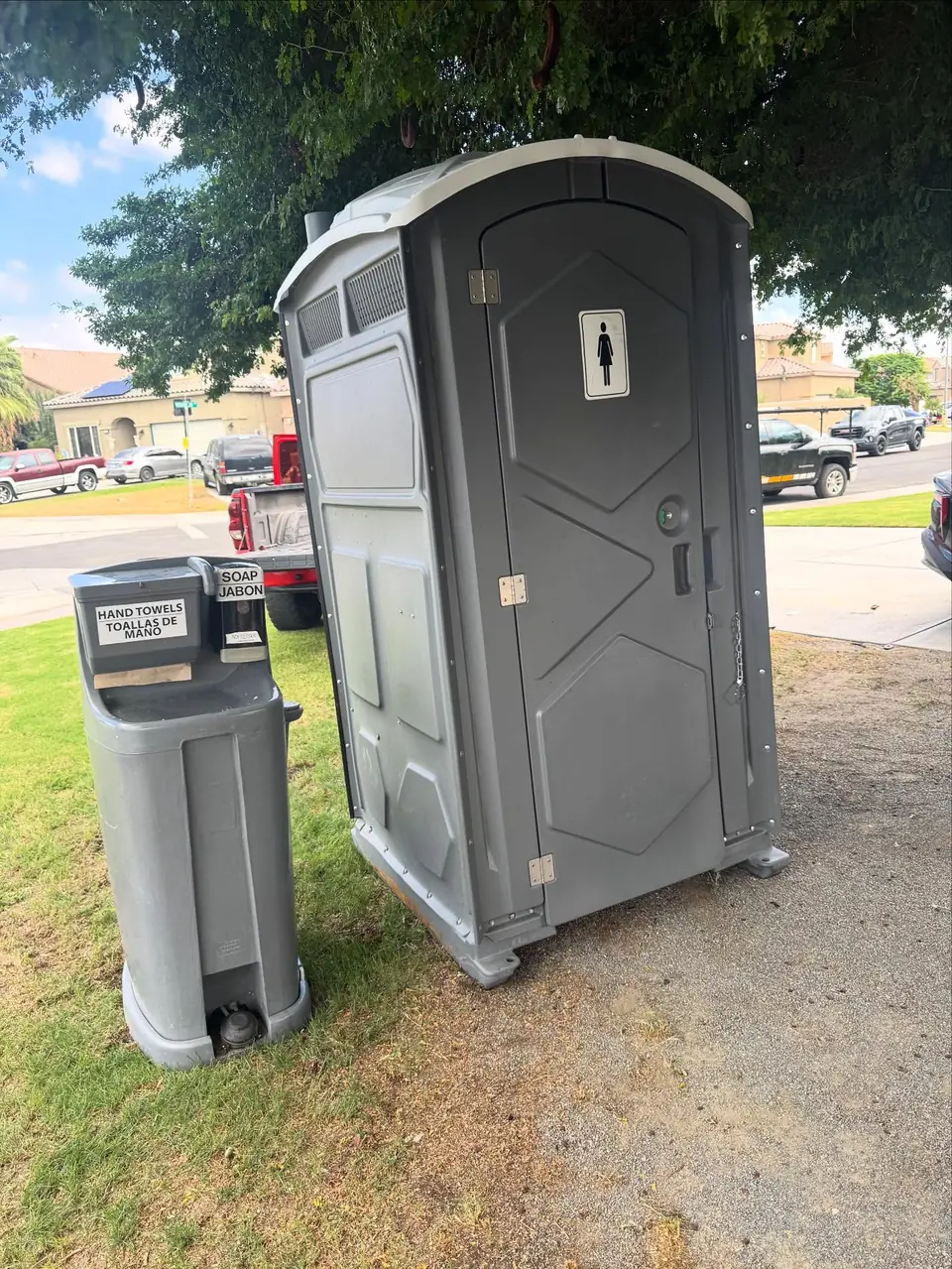
What should I do first when my septic system fails?
Stop sending water down the drains first: no flushing, no laundry and no dishwasher. Next, call a septic pumper licensed in South Carolina, and keep kids and pets away from wet or smelly spots in the yard. A porta potty can arrive the same day when you call by 12 noon.
- Stop the water. Every flush and shower pushes more water into a system that cannot take it.
- Call a licensed septic company. SCDES runs the septic pumper/hauler licensing program. Ask for the license before work starts.
- Keep people off the soggy area. Sewage on the surface carries germs. Rope off the spot if you can.
- Order a temporary toilet. Call by 12 noon, Monday to Saturday, for same-day porta potty delivery.
- Ask for a timeline. Your septic contractor can tell you if the job is a pump-out, a line repair or a new drain field.
- Call for pickup when the system passes. The rental stays until you call.
Who can pump or repair a septic system in South Carolina?
South Carolina requires a state license to pump septic tanks and to clean self-contained toilets. Under Regulation 61-56.1, septage may go only to disposal sites the state approves. Since July 1, 2024, those programs sit with SCDES, the agency that took over from DHEC, so older paperwork may still say DHEC.
Read the rule itself in SC Regulation 61-56.1. Repairs and new drain fields may also need a state permit and inspection. Ask your septic contractor which steps your job needs, and confirm with SCDES.
The same rule covers porta potties. Waste from our units goes only to state-approved disposal sites.
How many porta potties does a family need during a septic repair?
A family of up to 4 people needs 1 standard porta potty with weekly service. A standard unit holds about 60 gallons, and the maker rates that tank at around 200 uses. A family of 5 to 8 people needs a second weekly visit or a second unit, so the tank never overfills.
| People in the house | Uses per week (est.) | Setup |
|---|---|---|
| 1 to 4 | Up to about 196 | 1 standard unit, weekly service |
| 5 to 6 | About 245 to 294 | 1 unit plus a second weekly visit, or 2 units |
| 7 to 8 | About 343 to 392 | 2 standard units, weekly service |
The 7-uses-per-day figure is our planning estimate, not a rule. Families who work from home or have small kids may run higher.
Add a hand wash station if you want to keep water out of the house drains. The station has 2 foot-pump sinks, about 20 gallons of fresh water, soap and towels.
Is a wheelchair-accessible unit worth it for more room?
A wheelchair-accessible porta potty gives far more room than a standard unit. The ADA unit measures about 7 feet by 7 feet, with a ground-level floor, a 36-inch door and 60 inches of turning space. Older parents, small kids who need help and anyone on crutches find that unit easier to use.
The bigger unit needs a bigger flat spot and an open path to the door. A 44-inch gate will not pass it. See the ADA porta potty rental page for setup details.
A standard unit is fine for most healthy adults. Some families rent 1 of each.
How long will a temporary toilet be needed during a septic repair?
A septic repair rental bills by the 28-day cycle, and that cycle renews until you call for pickup. A pump-out may be done in 1 day, while a drain field job can wait weeks on permits and weather. Keep the porta potty until the system is fixed and your contractor says the drains are safe.
Weekly service is included in each cycle. The technician pumps the tank, scrubs the unit and restocks paper and sanitizer. You get an invoice each cycle and no long contract.
Place the unit where the truck stays off the repair area. Our porta potty placement checklist covers hose reach and drain fields.